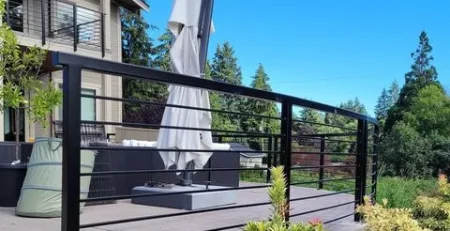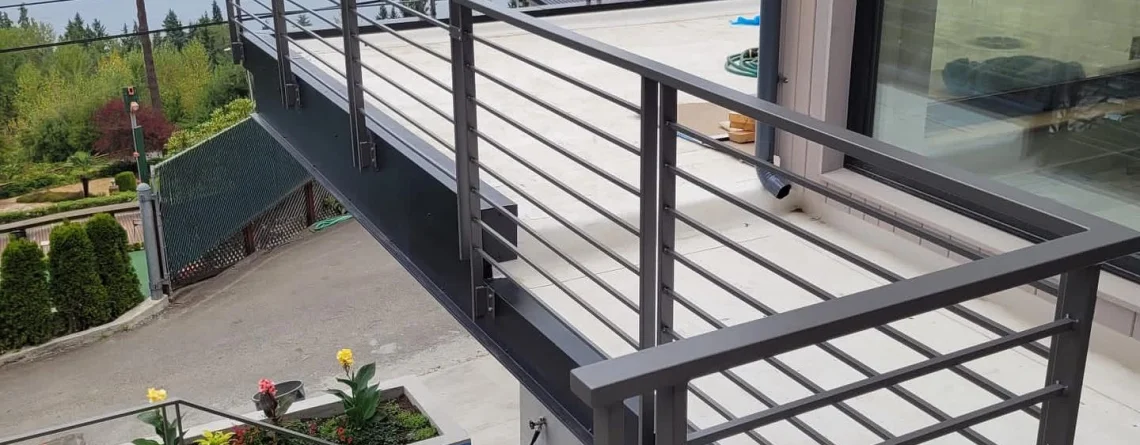
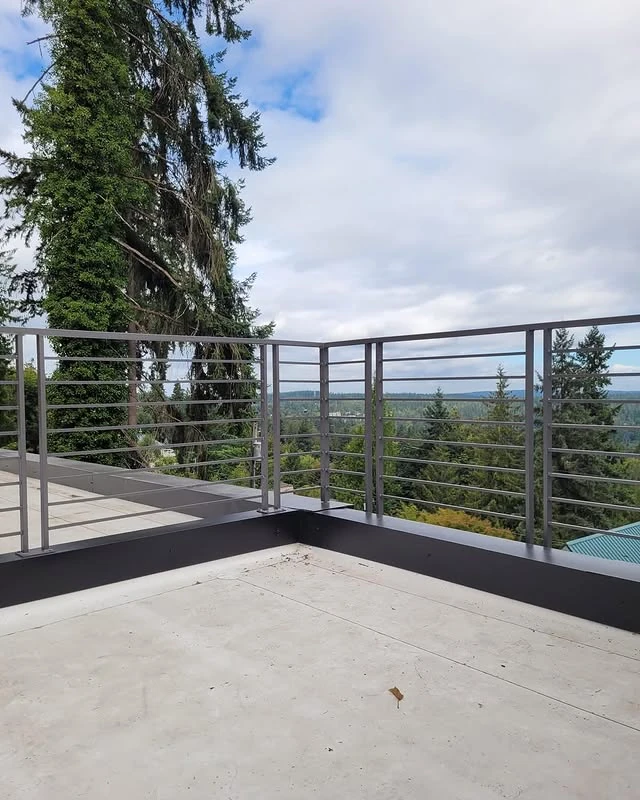
Horizontal aluminum railings frame this West Linn deck with crisp lines, open sightlines, and a neutral finish that complements the home’s modern exterior.
A raised deck can open a home to its surroundings, but the railing determines how that outdoor space feels once people step onto it. In this West Linn project, horizontal aluminum railings frame the deck, balcony edge, and nearby stair area without blocking the wooded and water views around the property.
The design uses straight posts, a rectangular top rail, and evenly spaced horizontal members. The gray finish connects with the dark fascia, window frames, and other exterior accents on the house. Against the light siding and pale concrete surfaces, the railing reads as a clear architectural line rather than a heavy visual barrier.
These custom exterior aluminum deck railings in West Linn, OR suit the home because they support the geometry already present in the building. Long roof edges, broad windows, straight wall planes, and crisp trim details all point toward a simple railing with controlled spacing and few decorative elements.
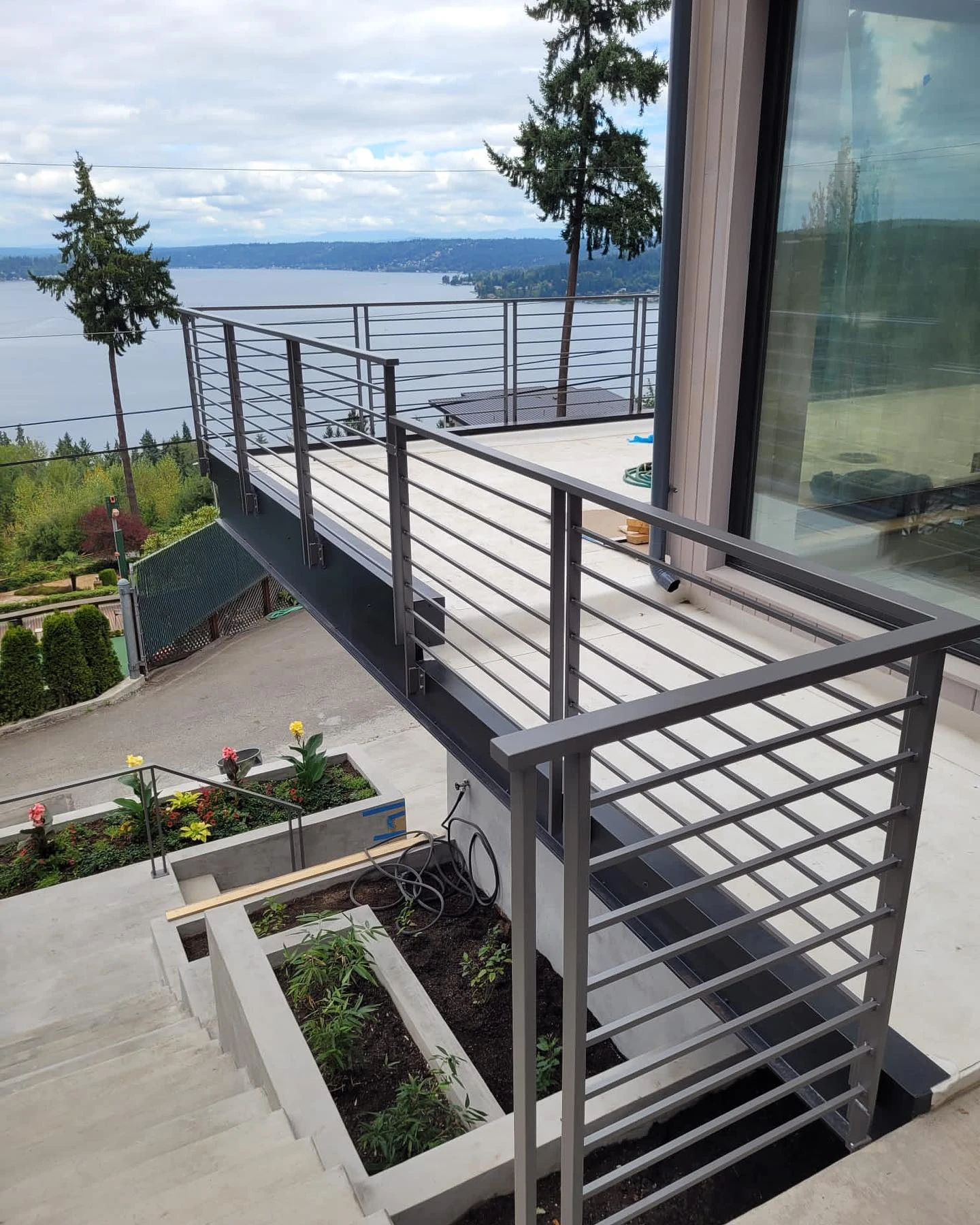
The strongest feature of this project is the view. Mature evergreens surround the property, and the raised outdoor area looks across the landscape toward open water and distant hills. A railing with bulky panels or dense ornamental details would compete with that setting.
Horizontal aluminum rails keep the view readable. The eye follows the long lines outward instead of stopping at a solid surface. From inside the home, the railing remains visible through the large glass doors, but its narrow profile allows the landscape to stay dominant.
This approach also works from the deck itself. The top rail creates a defined edge, while the horizontal infill breaks the barrier into thin bands. The result feels open without leaving the deck perimeter visually unfinished.
On a property with strong scenery, railing spacing and proportion matter as much as the material. Too many heavy elements can divide the view into small sections. Too few visible lines can make the railing feel disconnected from the architecture. Here, the repeated horizontal pattern gives the deck a finished frame while preserving long sightlines.
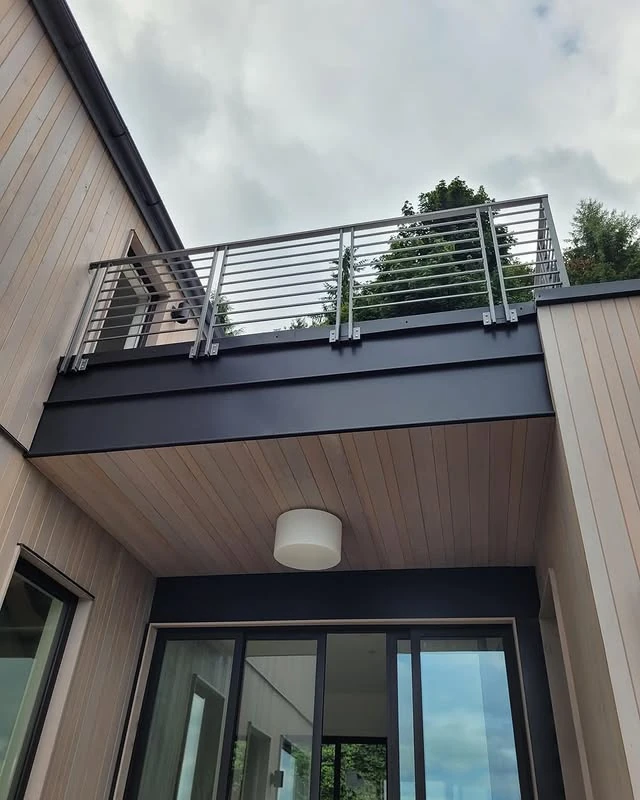
Aluminum is well suited to modern exterior railings because it can form clean, straight components with a relatively light visual presence. The material does not need ornate shapes to look complete. Its appearance comes from proportion, alignment, and the relationship between posts, rails, corners, and nearby surfaces.
The photos show a medium-gray finish that sits between the light siding and the darker structural bands around the deck. That middle tone helps the railing connect both color groups. It is dark enough to define the perimeter, but not so dark that every rail becomes dominant against the sky.
West Linn properties commonly include trees, grade changes, terraces, and outdoor areas positioned to take advantage of the surrounding landscape. Aluminum deck railings work well in that setting because they can follow long edges, wrap corners, and continue along steps without introducing a different visual language at each transition.
For homeowners comparing exterior railing materials, aluminum also offers practical maintenance characteristics. Routine care generally involves removing leaves and surface debris, rinsing exposed areas, and washing the rails with mild soap when needed. Joints and mounting areas should remain clear of trapped organic material. Abrasive pads and harsh cleaners are usually poor choices because they can mark the visible finish.
The house shown in these images uses light vertical siding, dark trim, large glass openings, and broad horizontal bands. The railing repeats those same design cues.
The vertical posts relate to the siding orientation, while the long infill rails connect with the deck edge, rooflines, and window heads. This balance prevents the exterior from leaning too strongly in one direction. Vertical details give the façade height; horizontal details give it width and stability.
The rectangular top rail also fits the architecture better than a rounded profile would. Square corners and flat surfaces appear throughout the home, so a straight-edged railing feels connected to the building rather than added later as a separate object.
Color plays an equal role. The gray railing does not attempt to match every dark element exactly. Instead, it belongs to the same neutral family. That small separation keeps the railing visible while allowing the deeper fascia and window frames to anchor the composition.re a solid panel could make the entry feel boxed in. The pickets create definition without forming a visual wall.
Homeowners considering aluminum deck railings should begin with the house and site rather than selecting a pattern in isolation. The most useful questions concern appearance, visibility, and how the railing will meet nearby features.
Consider the following points:
Photos taken from inside the home, from the deck, and from the yard can reveal different design concerns. A railing may look light from the deck but more prominent from below. Reviewing both viewpoints helps establish suitable proportions.
Horizontal aluminum railings are a strong match for contemporary homes, remodeled houses with modern additions, rooftop decks, balconies, terraces, and exterior stairs. They are especially effective where the background deserves attention.
The design can also work on homes that are not strictly modern. A restrained metal railing may provide a clean contrast against wood siding, concrete, stone, or simple stucco walls. The key is to repeat something already present in the property, such as a dark window frame, a straight roof edge, or a rectangular landscape wall.
This West Linn project demonstrates how one railing language can serve several outdoor areas. The upper deck remains open to the view, the balcony gains a defined edge, and the stair zone connects to the same architectural system. Nothing needs to be ornamental for the result to feel complete.
Contact Custom Railings OR for a free consultation and estimate. Let us design and install custom exterior aluminum deck railings in West Linn, OR.
📞 Call us today at (503) 999-7209