From Pearl District lofts to Craftsman bungalows in Irvington: how to choose the right metal, the right fabricator, and the right price for your staircase or loft railing.
Portland has a habit of gut-renovating old bones. A hundred-year-old Craftsman in Laurelhurst gets opened up, the wall between the kitchen and living room comes down, and suddenly there’s a staircase that needs to do more work than it used to. Or someone picks up a Pearl District loft and realizes the builder-grade steel cable rail looks like it belongs in a parking garage. Either way, the conversation usually ends up at the same place: we need custom metal railings.
The problem is that most homeowners don’t buy railings very often. You don’t know what questions to ask, you’re not sure what things should cost, and you can’t always tell the difference between a real fabricator and a guy with a welder and a phone. This guide is meant to fix that.
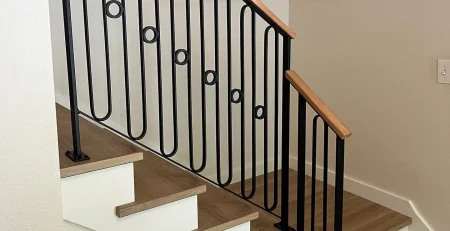
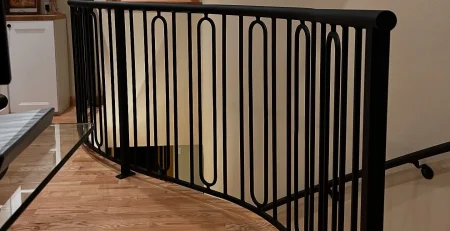
Wood railings are fine. They’re warm, they’re familiar, and a good carpenter can do beautiful work with them. But wood has limits that metal doesn’t. Custom steel, iron, and stainless railings can hold extremely precise geometry: tight angles, thin profiles, zero visual bulk, in a way that wood simply can’t match. And because each piece is welded or forged to spec, you’re not constrained by whatever baluster spacings the home center stocks.
Prefab metal railings have their place too, but if your stair run is even slightly nonstandard (and in most Portland homes built before 1970, it is), you’re either hacking a prefab kit to fit or you’re dealing with visible shims and gaps. Custom-fabricated railings are measured on-site, built to those dimensions, and installed without the compromises that come with off-the-shelf systems.
“A well-designed railing isn’t just a safety feature, it’s the vertical element that ties a room together. In open-plan homes, it’s basically furniture.”
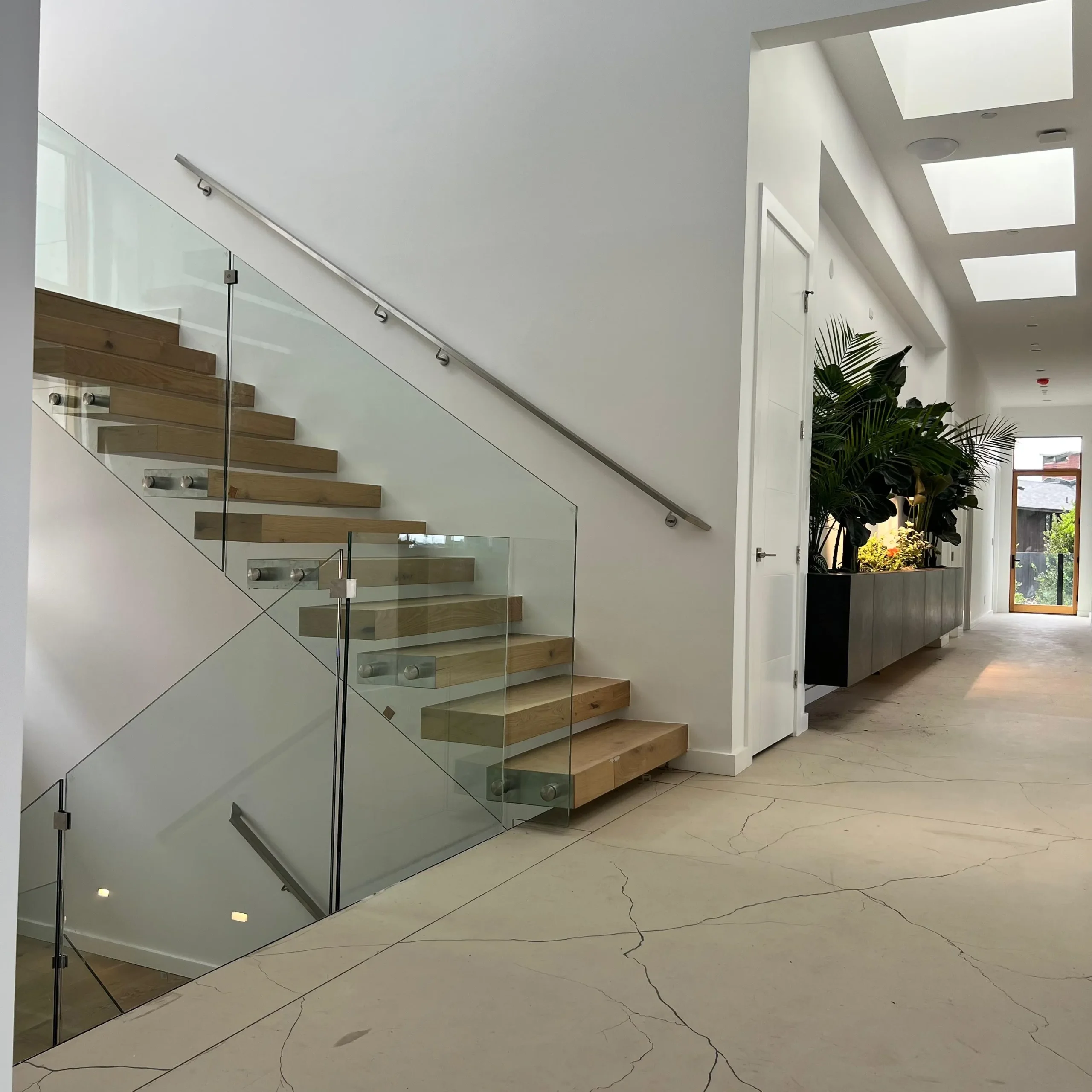
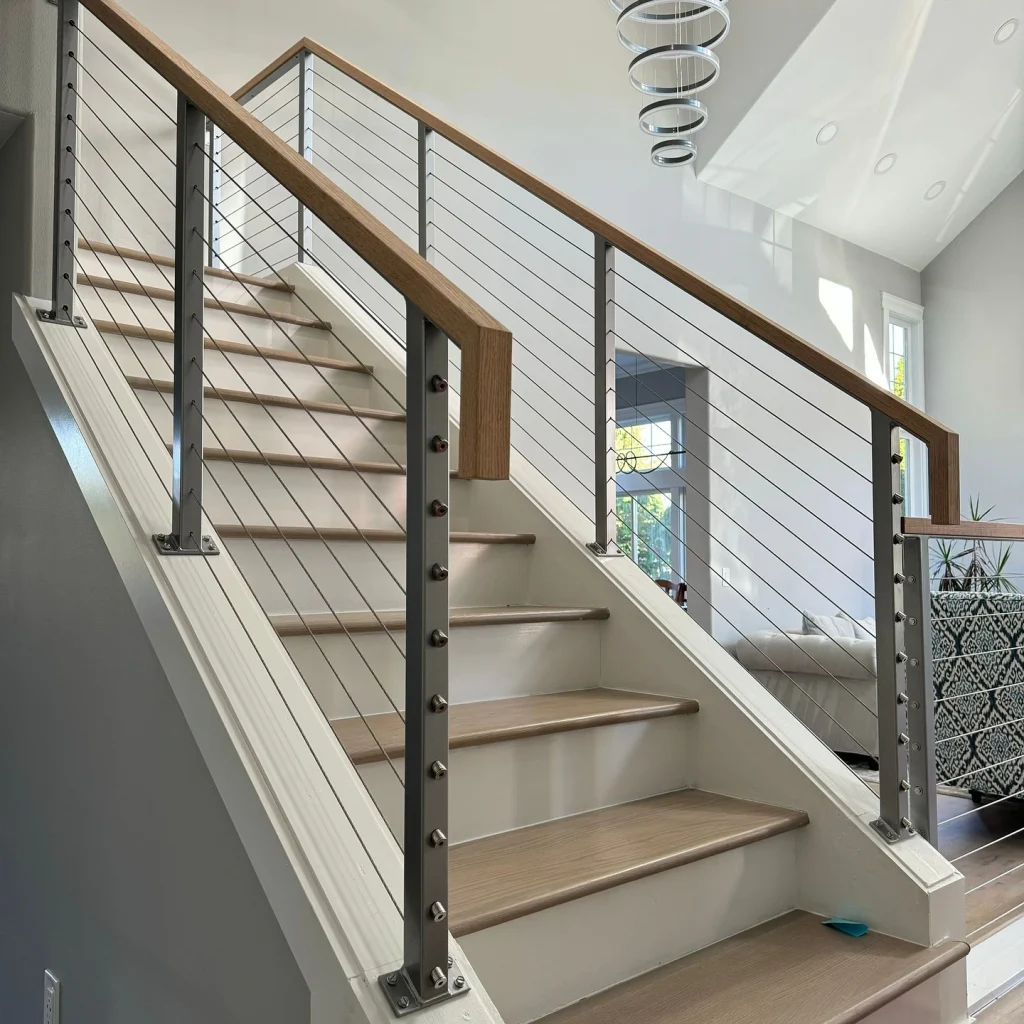
The metal you choose affects everything downstream: cost, lead time, maintenance, and what finishes are possible. Here’s how the main options stack up for Portland interior applications.
| Metal | Best For | Finish Options | Relative Cost | Maintenance |
|---|---|---|---|---|
| Steel | Most residential interiors; any style | Powder coat (any color), paint, wax, raw/patina | $ – $$ | Low (powder coat) |
| Wrought Iron | Traditional, Craftsman, Victorian homes | Paint, powder coat, oil finish | $$ | Low–moderate |
| Stainless Steel | Modern, contemporary, industrial styles | Brushed, satin, mirror polish | $$$ | Very low |
| Aluminum | Lightweight applications; budget builds | Anodized, powder coat | $ | Very low |
| Blackened / Patina Steel | Warm-industrial, loft, farmhouse modern | Raw black wax, clear coat | $$ | Moderate (wax annually) |
For most Portland homes, mild steel with a powder coat finish is the sweet spot. It’s cost-effective, weldable into almost any shape, and powder coat gives you a durable surface that won’t scratch or corrode the way raw steel will in the Pacific Northwest’s wet climate. Matte black is by far the most requested color — it photographs well, complements both warm wood tones and cool concrete, and ages gracefully.
Portland’s housing stock is diverse. You’ve got Victorian-era homes in the Irvington Historic District, Craftsman bungalows in Sellwood and Woodstock, mid-century ranches in Lake Oswego and Raleigh Hills, and a wave of modern infill and loft conversions in the Pearl, South Park Blocks, and along the East Side. The right railing style depends heavily on the bones of the house.
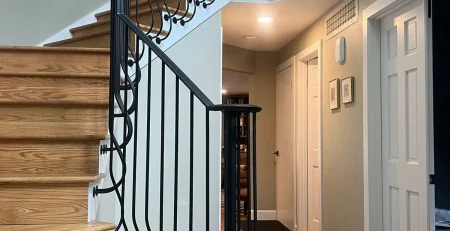
If you’re in a pre-1940s home in Portland, especially anything in Irvington, Laurelhurst, or the older sections of Southeast, traditional forged iron balusters with a newel post and handrail can be gorgeous. The key is restraint: a simple twist or taper pattern tends to age better than ornate scrollwork, which can feel busy in a renovated space.
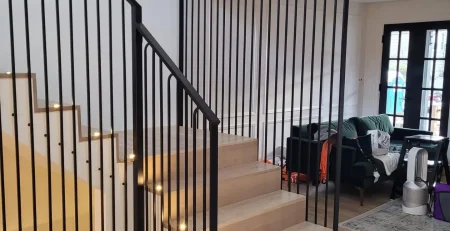
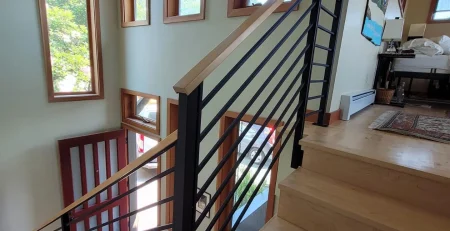
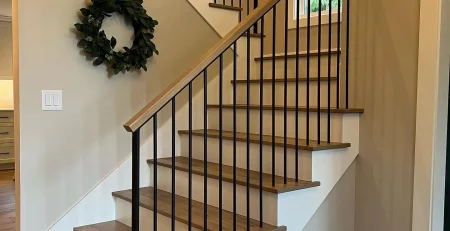
Horizontal flat bars welded between a top rail and bottom rail is probably the most-requested style for contemporary Portland renovations. It’s clean, it’s architectural, and it reads as modern without being cold. Works especially well in homes with exposed wood floors and white walls, which describes about half of Portland’s renovation projects. Vertical flat bar is a close second, and code-compliant flat bar spacing tends to be easier to achieve with vertical orientation.
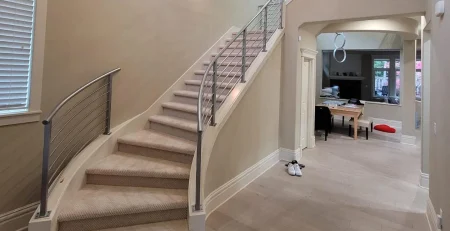
Cable rail (stainless steel cables tensioned through steel or wood posts) is popular when preserving sightlines matters: lofts, open staircases, spaces with a view into the backyard or a lower level. It’s a good choice for homes in Portland’s West Hills or Skyline neighborhoods where natural light is precious. Worth noting: cable rail requires tensioning hardware, and cheaper cable systems can look flimsy.
Steel posts with tempered glass panels are increasingly popular in higher-end Portland remodels, especially in the Pearl and South Waterfront. Glass panels maximize light flow and give a floating, gallery-like feel to a staircase. The tradeoff is cost (glass panels add significant labor and material expense) and ongoing maintenance: glass shows fingerprints.